About Design for Safety
Learn about Design for Safety (DfS) and the relevant laws and industry standards. Understand the duties of the various stakeholders involved.
Definition: Design for Safety
Design for Safety (DfS) is the process of identifying and reducing safety and health risks through good design at the conceptual and planning phases of a project.
Laws and Industry Standards
As a developer or designer, you are expected to comply with Singapore's WSH laws. You should pay particular attention to:
- WSH (Design for Safety) Regulations 2015
- WSH (Construction) Regulations 2007
- WSH (Risk Management) Regulations
You should also observe the WSH Guidelines on Design for Safety.
Stakeholders and Duties
Developers
- Work together with the designer to ensure foreseeable design risks are eliminated or reduced.
- Communicate foreseeable design risks, allocate sufficient time and appropriate resources for designers and contractors to perform their duties.
DfS Professionals
- Convene DfS Review Meetings on behalf of the developer.
- Keep an updated copy of DfS Register.
- Provide all relevant information on each foreseeable risk identified and its mitigation to the developer.
Designers
- Ensure foreseeable design risks are eliminated or reduced through the design plan.
- Ensure collective protective measures are taken to manage any residual design risks.
- Ensure all relevant information on design, construction and maintenance are available to stakeholders.
Contractors
- Inform developer or main contractor of any foreseeable risks.
- Provide all relevant information and ensure persons (e.g. subcontractors) hired are competent to carry out their duties.
- Carry out risk assessments to mitigate risks.
- Ensure safety during the construction phase.
Owners
- Keep a copy of the DfS Register.
- Communicate all foreseeable risks to persons carrying out maintenance and future works.
- Hand over DfS Register to future owners.
Watch the DfS Video below to learn more about the various stakeholders involved in a construction project and how they can work together to improve WSH outcomes through DfS.
Case Studies
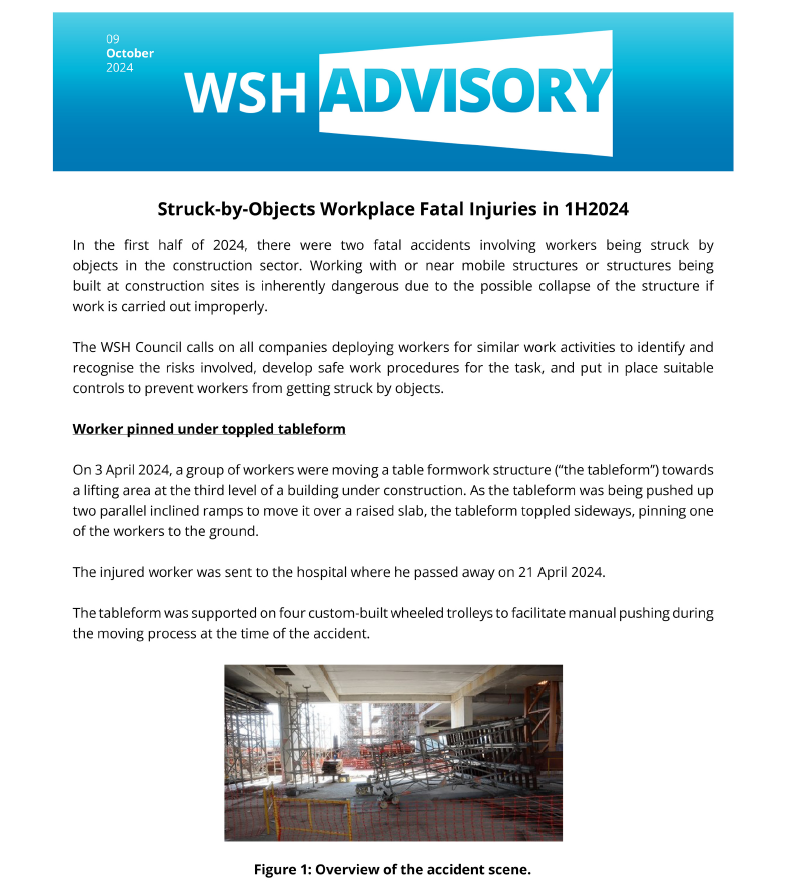
Learn from real workplace incidents and how DfS principles could have prevented them. These case studies highlight key lessons, practical design solutions and approaches to identifying and mitigating safety risks early in the design phase to improve project outcomes, and worker safety and well-being.
Good Practices Library
Explore a curated collection of DfS examples from across various industries in Singapore.
The library showcases practical design improvements contributed by industry and government to help integrate safety considerations into design decisions from the onset.